
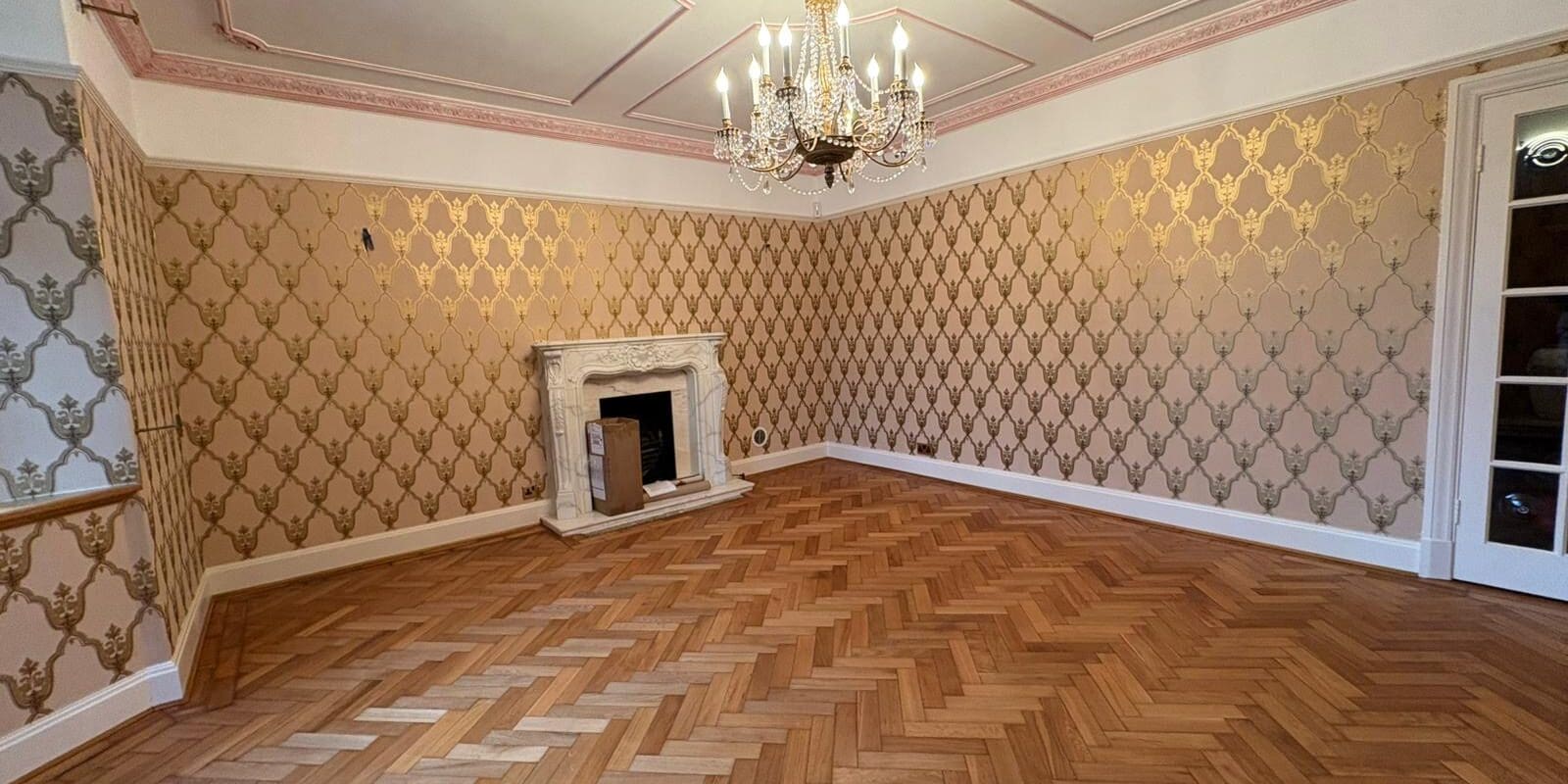
Wallpaper has evolved far beyond simple paper finishes. Today, there are many different types of wallpaper designed to suit various interiors, lifestyles, and installation preferences. From smooth minimalist finishes to richly textured luxury wallcoverings, understanding the options available – and their installation requirements – is essential before starting your project.
In this guide, we’ll explore the most popular types of wallpaper, explain how they are installed, and help you decide which option is right for your space.
Types of Wallpaper
When choosing wallpaper, material matters just as much as pattern or colour. Below is a breakdown of the most common wallpaper categories and what makes each unique.
Woven Wallpapers
Woven wallpaper is created by weaving fibres together, resulting in a textile-like finish. These wallcoverings are typically luxurious, offering depth and visual interest. They are often fabric-backed, making them heavier and more complex to hang. Installation usually requires professional expertise to ensure seamless joins and prevent damage.
Non-Woven Wallpapers
Non-woven wallpaper is made by bonding fibres together rather than weaving them. This category includes non-woven fabric wallpaper and non-woven paper wallpaper, both of which are durable, breathable, and resistant to tearing. These types of wallcoverings commonly use non-woven wallpaper adhesive, which is applied directly to the wall, making installation cleaner and faster than traditional methods.
Vinyl and Vinyl-Coated Wallpapers
Vinyl wallpaper is one of the most practical options for modern homes. It features a vinyl surface or coating, making it highly durable, moisture-resistant, and easy to clean. This makes it ideal for kitchens, bathrooms, hallways, and high-traffic areas where a wipeable surface is essential.
Fabric or Textile Wallcoverings
Fabric wallpaper creates a soft, tactile finish and includes materials such as silk, flock wallpaper, linen, cotton, leather, suede, and natural options like grasscloth wallpaper. While visually striking, these wallcoverings are often delicate and less forgiving during installation. Imperfections in walls are easily highlighted, so proper surface preparation is vital.
Embossed and Textured Wallpaper
Embossed wallpaper and textured wallpaper feature raised patterns that add dimension to a room. Texture paper wallpaper can also help disguise minor wall imperfections. Because of their weight and pattern alignment requirements, professional wallpaper installation is often recommended for these designs.
Metallic, Foils & Gold Leaf Wallpaper
For a bold, statement finish, gold leaf wallpaper, metallic wallpapers, and foils reflect light beautifully. However, they show every flaw, paste mark, and installation error, so precision is essential as repositioning can damage the surface.

The Difference Between Paper-Backed and Fabric-Backed Wallpaper
Understanding material backing of your wallpaper before proceeding is a crucial step to ensure you’re applying the right type of wallpaper for your requirements and preparing your surface in the right way.
- Paper-backed wallpaper is lighter and often more affordable, but it expands when wet, increasing the risk of visible seams if installed incorrectly.
- Fabric-backed wallpaper is heavier and more stable, offering better durability and a more premium appearance. However, it requires stronger adhesive and careful handling during installation.
Fabric-backed and woven wallcoverings typically benefit from professional wallpaper installation due to their complexity.
Methods of Wallpaper Installation
Different wallpapers require different installation methods. Knowing the things to consider and avoid when hanging wallpaper can be the difference between a flawless finish and costly mistakes.
Peel & Stick Wallpaper (Self-Adhesive)
Self-adhesive wallpaper is popular for DIY and short-term solutions. It doesn’t require paste and can often be removed easily. However, it relies heavily on perfectly smooth walls and isn’t always suited for long-term use.
Paste-the-Paper Installation
This traditional method involves applying adhesive directly to the wallpaper. Paper-based wallpapers often require soaking time to allow expansion, which demands accuracy and patience.
Paste-the-Wall Installation
Commonly used for non-woven wallpapers, this method is cleaner and more efficient. The adhesive is rolled onto the wall, allowing for easier positioning and adjustment during installation.
Pre-Pasted Installation
Pre-pasted wallpapers have adhesive on the back that activates with water. Whilst convenient, timing is crucial to avoid drying out or over-saturating the paper.
Dry Strip Installation
Many modern wallpapers allow for dry stripping, meaning removal without excessive water or damage. This is particularly beneficial for future redecorating.
Commercial Installation
Commercial-grade wallpaper installation requires heavier adhesives and advanced techniques. These wallcoverings are designed for durability in offices, hotels, and public spaces, and should always be handled by professionals.

Questions to Ask Yourself Before Deciding on a Wallpaper
Before choosing wallpaper, it’s worth considering how it will perform in real-life conditions.
Are you looking for rich texture or smooth to touch?
Textured or fabric wallpapers add depth and luxury, while smooth finishes deliver a clean, modern look.
Is this a high-traffic area?
Durability matters in hallways, staircases, or commercial spaces. Vinyl and non-woven wallpapers tend to perform best here.
Do you have children or pets?
Maintaining and cleaning wallpaper is considerably easier with wipeable and stain-resistant surfaces such as vinyl and vinyl-coated wallpapers.
Are you planning to install it yourself?
DIY-friendly options like peel & stick or paste-the-wall wallpapers are usually easier for homeowners. However, if you’re not confident in your DIY abilities, the benefits of hiring a wallpaper hanging specialist will likely outweigh doing it yourself as mistakes could prove costly.
Is this a short-term or long-term solution?
Temporary designs suit rentals or trend-led spaces, while premium wallcoverings are better suited for long-term interiors.
What is your budget?
Costs vary depending on material, preparation, and installation complexity. High-end wallpapers require expert handling, which should be factored into your budget.
Summary
With such a wide range of different types of wallpaper available, choosing the right one involves balancing aesthetics, durability, and installation requirements. From woven and non-woven fabric wallpaper to vinyl and mural wallpaper, textured finishes, and metallic designs, each type demands a specific installation approach.
Understanding wallpaper installation methods can help you decide whether a DIY approach is realistic or if professional wallpaper install services is the smarter choice.
If you’re planning a wallpaper project and want flawless results, Marshels is here to help. Get in touch with our experienced team today to discuss professional wallpaper installation, receive a free quote, and transform your space with confidence.