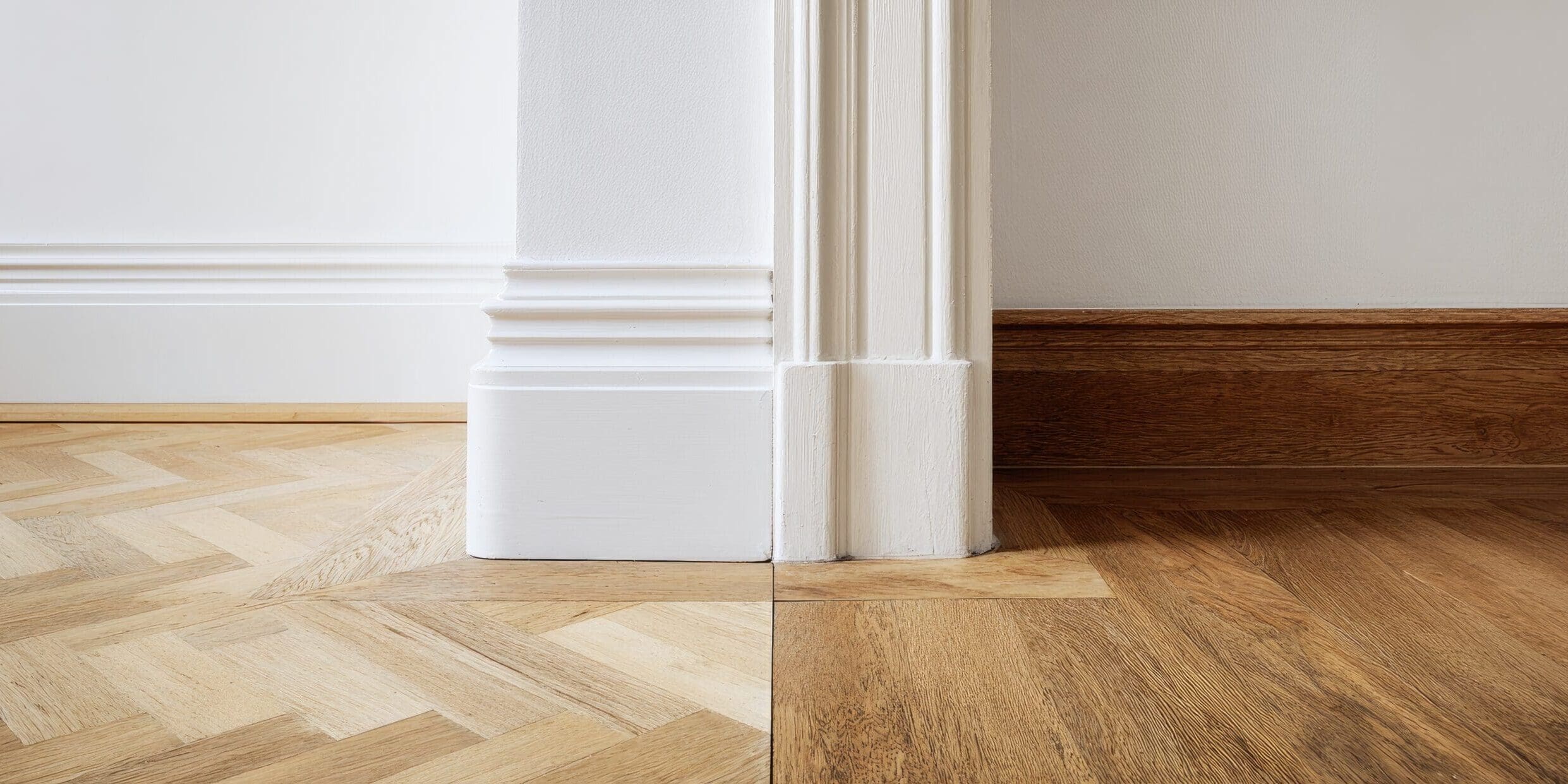
Skirting boards are often treated as a finishing detail, yet they play a defining role in the character of a room. The right skirting board profiles can enhance proportions, complement architectural features, and tie together decorative mouldings throughout your interior.
Whether you’re restoring a period property or refreshing a modern home, understanding which profile suits your space is key. In this guide, we explore period styles, paint choices, and practical decorating advice to help you choose the best type of skirting boards for your home or commercial property.
Understanding Skirting Board Profiles: Period by Period Guide
When selecting skirting board profiles, it helps to look at architectural history. Many decorative wooden mouldings used today are inspired by traditional period skirting board designs.
Georgian Period (1714–1837)
Georgian interiors are known for symmetry, elegance and classical influence. A period skirting board from this era is typically tall, refined and balanced.
Common features include:
- Simple ogee or cyma recta curves
- Subtle stepped details
- Well-proportioned decorative mouldings
- Harmonised cornices and coving
In Georgian homes, skirting boards were often installed following the “one-twelfth rule” (more on this later), meaning their height was proportionate to ceiling height. If you’re restoring a townhouse or formal property, taller, classically influenced decorative timber mouldings will feel most authentic.
Victorian Period (1837–1901)
Victorian homes embraced ornamentation. As manufacturing improved, more intricate decorative mouldings for walls became widely available.
Victorian skirting board profiles are typically:
- Deeper and more elaborate
- Featuring detailed curves and layered profiles
- Paired with bold architraves and decorative skirting board detailing
A Victorian period wooden skirting style often includes prominent top mouldings and stronger shadow lines. These suit homes with high ceilings and traditional fireplaces. If you’re undertaking a full home refurbishment, matching your skirting with original ceiling roses and coving will create cohesion.
Edwardian Period (1901–1910)
Edwardian design softened the heaviness of late Victorian interiors. Profiles became simpler but still retained character.
What to expect from Edwardian style skirting boards:
- Cleaner lines
- Reduced ornamentation
- Balanced proportions
- Elegant yet understated decorative designs
Edwardian homes often feature slightly lower skirting than Victorian properties but still maintain presence. If your home dates from this era, it’s often best to avoid overly modern square-edge boards that may not compliment other traditional architectural features in the space.
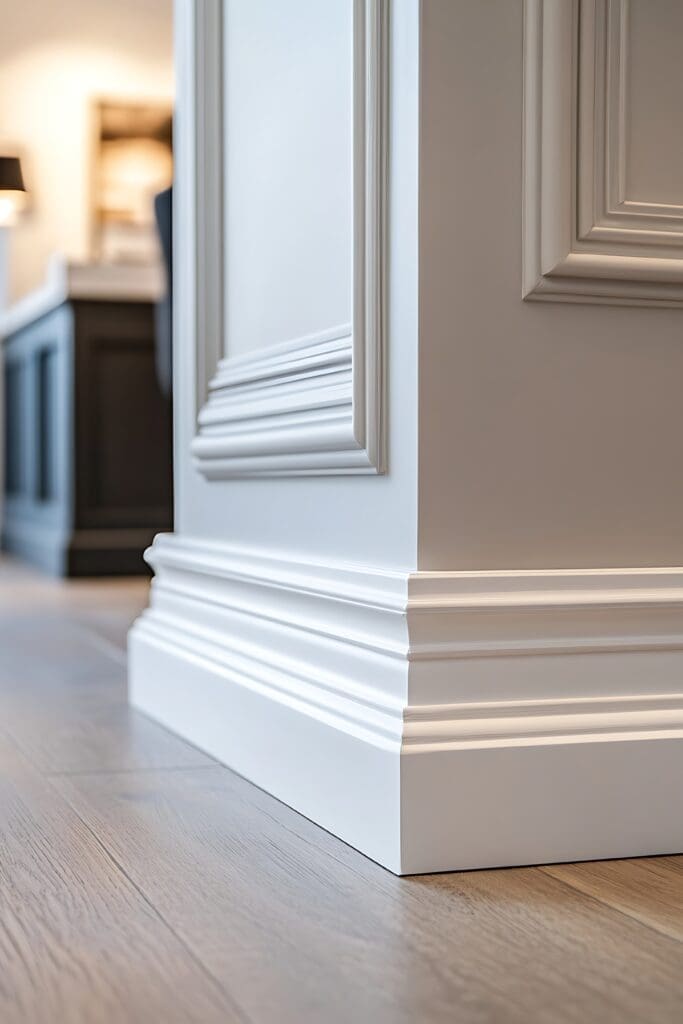
Best Paints for Skirting Boards: Colours and Finishes
Once you’ve selected the right skirting board profiles, paint becomes the next important decision.
What Is the Best Paint for Skirting Boards?
The best paint for skirting boards is typically a durable trim paint designed for woodwork. In the UK, homeowners often choose:
- Satinwood (soft sheen, durable, modern finish)
- Eggshell (subtle sheen, traditional feel)
- Gloss (high shine, very hard-wearing)
Water-based satin is now widely preferred for its low odour and non-yellowing finish.
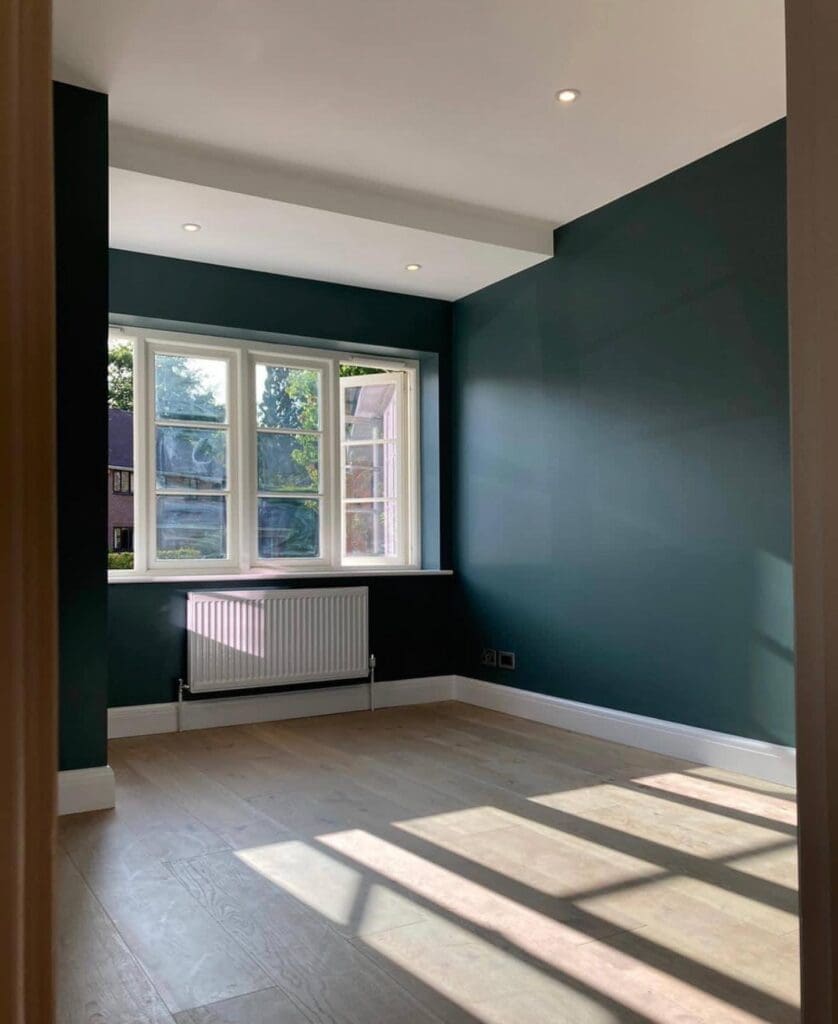
Coloured Skirting Boards: A Growing Trend
While white remains classic, coloured skirting boards are becoming increasingly popular. Matching skirting to wall colour can:
- Make ceilings feel higher
- Create a contemporary, seamless look
- Highlight decorative skirting board profiles
Alternatively, a darker contrasting trim can frame lighter walls beautifully.
How to Paint Skirting Boards
Follow the steps below when painting skirting boards:
- Prepare the area by clearing the space and laying down drop cloths
- Clean and degrease the skirting boards thoroughly
- Use filler to repair any imperfections and then sand until smooth
- Apply a primer to maximise durability and paint adhesion
- Use decorators caulk for skirting boards to seal gaps
- Apply a thin coat of paint then follow the manufacturer’s instructions for drying time before applying a second coat.
Decorating Tips for Skirting Boards
For professional results, many homeowners choose experienced interior painters and decorators who understand both preparation and period detailing. However, if you’re looking for information on how to decorate skirting boards yourself, here’s some helpful tips and guidance to follow.
Getting Heights Right (The One-Twelfth Rule)
Traditionally, skirting height was determined by ceiling height. The one-twelfth rule suggests that skirting boards should measure approximately one-twelfth of the room’s ceiling height.
For example:
- A room with a ceiling height of 2.4m should have skirting boards measuring roughly 200mm
- Skirting boards should measure roughly 250mm for a room with a ceiling height of 3m
This principle ensures proportions feel balanced, which is particularly important in period properties using decorative wooden mouldings.
Matching Existing Architecture
Whether you’re fitting or painting coving, architraves, ceiling roses, skirting boards or other decorative mouldings, each should complement the other architectural features of the room.
For example, mixing ultra-modern skirting board profiles with ornate period detailing will often end up looking disjointed. Aim for consistency in profile depth and moulding style across the room.
The Hierarchy of Mouldings
In traditional interiors, mouldings follow a hierarchy:
- Cornice/coving (largest scale)
- Door architraves
- Skirting boards
Skirting should never overpower cornice detailing. If you are installing decorative timber mouldings elsewhere in the room, ensure the scale of your decorative skirting feels balanced.
Practical Considerations for Decorating Your Skirting Boards
Some properties come with their challenges, which is particularly common in older properties that have sustained years of use and redecoration. Here’s some things to be mindful of before updating your skirting boards.
Working with Uneven Period Floors
Period properties often have uneven floors or settlement dips. This can create visible gaps beneath skirting.
Solutions include:
- Scribing the skirting to the floor contour
- Using flexible decorators caulk for skirting boards
- Installing decorative skirting board covers to conceal irregularities
Hiring professional painters and decorators will ensure clean, tight joints and a flawless finish even in the most challenging of spaces.
Dealing with Existing Painted Layers
Many period wooden skirting boards have accumulated decades of paint. Thick layers can obscure the original decorative mouldings.
Options include:
- Careful sanding and repainting
- Chemical paint stripping
- Replacing with matching period skirting board profiles
If restoring original timber, take care not to damage detailing during preparation.
Modern Materials in Period Settings
Today’s skirting boards are available in a range of materials such as MDF, softwood and hardwood. MDF offers a stable and smooth surface for painting whilst usually being the most cost-effective option. Alternatively, solid timber options such as hardwood and softwood usually offer a more authentic and traditional feel but are often more costly.
Summary
Choosing the right skirting board profiles is about more than finishing a wall, it’s about proportion, architectural consistency and detail.
To recap some of the key points covered:
- Match your profile to your home’s period style
- Follow the one-twelfth rule for balanced proportions
- Respect the hierarchy of mouldings
- Choose durable trim paint for longevity
- Consider coloured skirting boards for a modern twist
- Prepare thoroughly when decorating
Whether you’re restoring period wooden skirting or installing decorative skirting in a modern home, attention to detail makes all the difference.
If you’re planning a wider home refurbishment or want expert support decorating your skirting boards professionally, get in touch with Marshels today to ensure your space is finished to the highest of standards.