
The hallway is often the first area people see when entering your home, yet it’s frequently overlooked when it comes to interior design. Whether you’re working with a spacious entrance hall or a compact corridor, the right wallpaper can completely transform the space, adding personality, warmth and visual interest.
From bold statement designs to subtle textures, choosing the perfect wallpaper in a hallway can help create a welcoming atmosphere whilst enhancing the overall style of your home. In this guide, we’ll explore inspiring hallway wallpaper ideas, explain how to choose the best wallpaper for hallway areas, share tips for making narrow hallways appear larger, and provide a simple step-by-step guide on how to wallpaper a hallway successfully.
Why Choose Wallpaper in a Hallway?
Paint remains a popular option for hallways, but wallpaper installation offers unique design opportunities that can be difficult to achieve with colour alone.
Wallpaper allows homeowners to introduce patterns, textures and feature designs that instantly enhance the appearance of the space. Because hallways are generally transitional areas rather than rooms where people spend extended periods, they can be an excellent place to experiment with bolder designs that might feel overwhelming elsewhere.
Benefits of wallpaper in a hallway include:
- Creating a memorable first impression
- Adding depth and character to plain walls
- Highlighting architectural features
- Introducing colour and texture
- Defining a particular interior design style
- Making smaller spaces appear larger
Hallway Wallpaper Ideas
Whilst the style you choose will largely depend on your preferences, below are some ideas for hanging wallpaper that work well in most hallways.
Classic Striped Wallpaper
A striped wallpaper hallway design remains one of the most popular choices for traditional and contemporary homes alike.
Vertical stripes can make ceilings appear taller, whilst wider horizontal stripes may help visually widen a narrow space. Subtle tonal stripes create elegance, whereas bold contrasting colours make a stronger design statement.
Hallway Feature Wallpaper
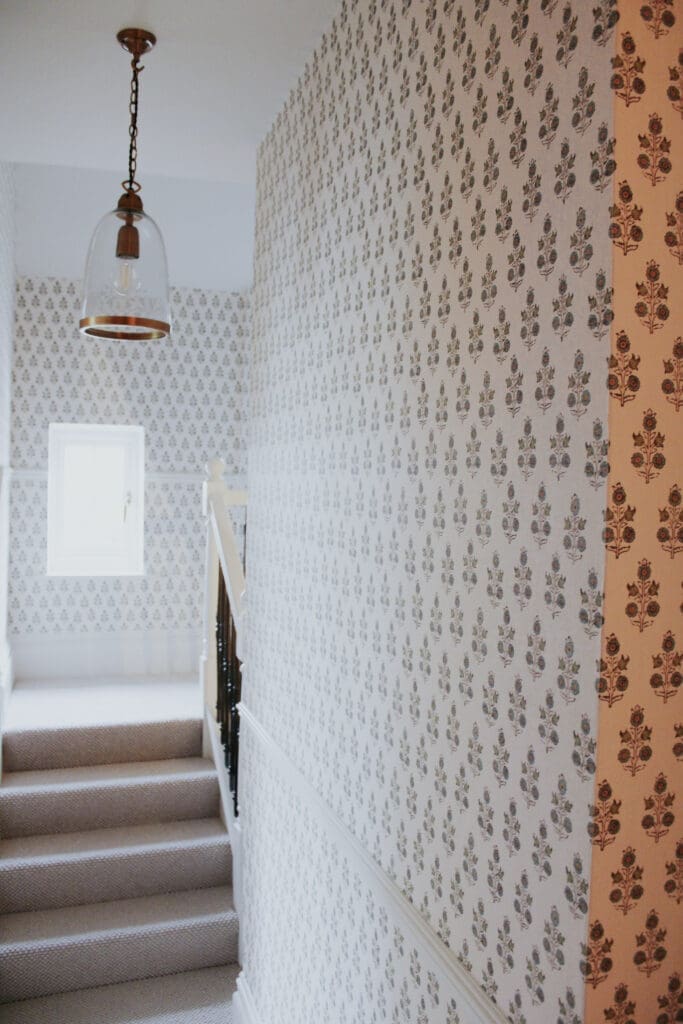
Feature wallpaper on a hallway wall is an excellent way to introduce pattern without overwhelming the entire space.
Consider wallpapering the wall directly opposite the front door or highlighting a staircase wall to create a focal point that draws the eye through the hallway.
Botanical and Nature-Inspired Designs
Floral prints, leafy patterns and botanical murals can bring warmth and freshness to an entrance area.
Nature-inspired wallpapers work particularly well in hallways that receive plenty of natural light and pair beautifully with neutral flooring and painted woodwork.
Wallpaper and Panelling Hallway Designs
A hallway split between wallpaper and panelling has become increasingly popular in recent years.
This approach combines decorative wallpaper with traditional wall panelling, creating a sophisticated and timeless look. The lower portion of the wall is typically panelled and painted, with patterned wallpaper applied above.
This style works especially well in Victorian, Edwardian and period properties.
Textured and Faux-Finish Wallpapers
For homeowners who prefer subtle design, textured wallpapers can add depth without introducing busy patterns.
Options such as linen-effect, grasscloth-inspired or plaster-look wallpapers create visual interest while maintaining a clean, understated appearance.
Choosing the Best Wallpaper for Hallway Areas
Hallways experience more foot traffic than many other rooms, so durability is an important consideration when selecting wallpaper for hallway spaces.
Understanding the different types of wallpaper materials can help you choose the most suitable option. Below are some durable options that suit high-traffic areas such as hallways.
Vinyl Wallpaper
Vinyl wallpaper is often considered the best wallpaper for hallway areas due to its durability and ease of maintenance.
It is resistant to scuffs, marks and moisture, making it ideal for busy family homes where walls may experience regular contact and maintaining and cleaning wallpaper is required more frequently than other areas of the home.
Non-Woven Wallpaper
Non-woven wallpaper has become increasingly popular because it is easy to install and remove.
Many products allow paste to be applied directly to the wall rather than the paper itself, simplifying the installation process and reducing the likelihood of stretching.
Washable Wallpaper
Washable wallpapers are particularly useful in hallways where fingerprints, muddy marks and everyday wear are common.
They can be cleaned more easily than traditional papers, helping maintain their appearance for longer.
Textured Wallpaper
Textured wallpapers can help disguise minor wall imperfections while adding a luxurious finish.
However, they may be slightly more challenging to install and clean compared to smoother alternatives.
Making Narrow Hallways Feel Bigger with Wallpaper
Decorating narrow hallways can be challenging for homeowners, but with the right wallpaper choices and clever decorating techniques, it’s entirely possible to create the illusion of more space. Below are some top tips.
Choose Light Colours
Lighter wallpapers reflect more light and can make confined areas feel brighter and more open.
Soft neutrals, pale greys, creams and muted pastels are all great narrow hallway wallpaper choices.
Avoid Overly Busy Designs
While bold patterns can look stunning, excessively crowded designs may make a narrow hallway feel even tighter.
Instead, choose medium-scale patterns that provide interest without overwhelming the space.
Consider Metallic Accents
Wallpaper with subtle metallic detailing can reflect both natural and artificial light to create the impression of more space – great for adding depth and brightness in smaller hallways.
Use Vertical Patterns
Vertical designs naturally draw the eye upward, helping walls appear taller and reducing the sense of confinement.
For this reason, striped wallpaper remains a popular choice in smaller hallways.
Consider Metallic Accents
Wallpaper with subtle metallic detailing can reflect both natural and artificial light to create the impression of more space – great for adding depth and brightness in smaller hallways.
Create Visual Flow
If you’re using wallpaper in hallway and stairs areas, selecting a continuous design can help create a smoother visual transition between levels, making the overall space feel larger and more cohesive.
How To Measure a Hallway for Wallpaper
Before ordering wallpaper, it’s essential to calculate how much you’ll need. When considering how to measure a hallway for wallpaper, follow these simple steps:
- Measure the width of each wall you intend to wallpaper.
- Measure the height from the floor (or skirting boards if applicable) to ceiling.
- Multiply width by height for each wall section.
- Add all wall areas together to determine the total square metre coverage.
- Subtract large windows and door openings if desired, although it’s often advised to leave these included as allowance for waste.
- Check the wallpaper roll coverage specified by the manufacturer.
- Allow extra material for pattern matching and mistakes.
Ordering an additional roll can help avoid colour batch variations if extra wallpaper is needed later.

How To Wallpaper a Hallway
Wallpaper hanging requires skill, patience and preparation, particularly in areas with corners, doorways and staircases. Whilst capable DIYers may look to tackle this challenge themselves, many seek professional wallpaper hanging services to avoid costly mistakes and ensure a flawless finish that stands the test of time.
If you decide to undertake a hallway wallpaper project yourself, below is a simple step-by-step guide to follow.
Prepare the Walls
Remove old wallpaper, fill any cracks or holes and sand rough surfaces smooth. Walls should be clean, dry and dust-free before installation begins.
Mark a Straight Starting Line
Use a spirit level or plumb line to create a perfectly vertical guideline. Starting straight is crucial as even minor deviations become more noticeable with each subsequent strip.
Cut and Prepare the Wallpaper
Measure carefully and cut each length according to wall height, allowing a small amount of excess for trimming. Follow the manufacturer’s instructions regarding paste application.
Apply the Wallpaper
Begin at your guideline and smooth the paper into position using a wallpaper brush or smoothing tool. Work from the centre outward to remove air bubbles.
Match the Pattern
When applying subsequent strips, align the pattern carefully to maintain a seamless appearance. Take your time, as pattern matching is often the most visible aspect of the finished installation.
Trim and Finish
Use a sharp blade such as a Stanley knife to trim excess wallpaper around ceilings, skirting boards, doors and corners. Wipe away any excess paste immediately to achieve a clean finish.
Summary
Choosing the right hallway wallpaper can dramatically enhance the look and feel of your home’s entrance. Whether you’re drawn to bold feature walls, elegant stripes, wallpaper and panelling hallway designs or subtle textured finishes, there are countless ways to personalise the space.
Selecting the best wallpaper for your hallway’s conditions, understanding how to measure a hallway for wallpaper correctly and following a careful installation process are key to the success of your project.
For narrow hallways, thoughtful pattern selection, lighter colours and strategic design choices can create the illusion of more space, helping your hallway feel brighter, larger and more welcoming from the moment guests step through the door.
If you’re looking for professional support for your wallpapering project, our specialist decorators are on hand to ensure a top-quality finish to your project. Get in touch with our friendly team for more information and a free no-obligation quote.