From the intricate detailing of a historic ceiling to the decorative features of an elegant period interior, gold leaf finishes can bring a remarkable sense of character, depth and sophistication to a space. Used for centuries in architecture and decorative arts, gilding remains a popular way to enhance interiors, restore original features and introduce subtle or striking metallic detailing.
But what exactly is gilding, how is it applied, and what should you consider when choosing a finish for your property?
In this guide, we explore the techniques, materials and benefits of architectural gilding work, including how professional application can transform walls, ceilings and decorative architectural features. Whether you’re restoring a historic property or looking to introduce something special to your interior, discover what’s involved and how Marshels’ professional gilding services can help.
What Is Gilding?
Understanding the meaning of gilding
Gilding is the decorative process of applying an extremely thin layer of metal, most commonly gold leaf, to a prepared surface. The result is a metallic finish that catches and reflects light, creating a distinctive appearance that can range from understated elegance to an impressive, high-shine effect.
The meaning of gilding is essentially the application of gold or another metallic material to a surface to enhance its appearance. While the technique has been used for thousands of years, it remains an important part of architectural decoration and heritage restoration today.
A gilder is the skilled craftsperson responsible for carrying out this work. Professional gilders understand the preparation, materials and application techniques required to achieve a consistent, long-lasting finish.
What is architectural gilding?
Unlike the gilding of smaller decorative objects, architectural gilding focuses on permanent features within buildings. This includes walls, ceilings, plasterwork, mouldings and other architectural details.
It can be used to recreate original decorative finishes in historic buildings, enhance ornate interiors or introduce metallic accents into contemporary spaces. From traditional gold detailing in stately homes to more modern decorative schemes, the technique offers considerable creative flexibility.
Where Can Gilding Be Used in Your Home?
One of the most appealing aspects of gilding is its versatility. It can be applied to a variety of architectural surfaces, helping to highlight features that might otherwise go unnoticed.
Ceilings and ceiling details
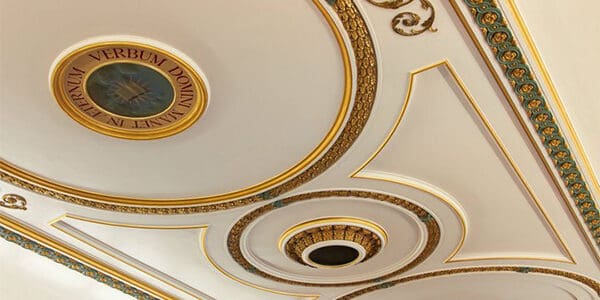
Ceilings are particularly effective areas for gilding, especially in properties with high ceilings, decorative plasterwork or intricate architectural features.
Gold leaf can be applied to ceiling roses, cornices, ceiling mouldings and ornamental plasterwork to emphasise their detail. It can also be used across larger ceiling areas to create a more dramatic decorative statement.
In period properties, gilding can help restore the original character of a room, while in more contemporary interiors it can introduce an interesting contrast against painted surfaces.
Walls and decorative features
Gilding can also be used on walls to create decorative panels, borders, patterns and metallic detailing. It works particularly well alongside traditional decorative painting techniques, adding depth and visual interest without necessarily overwhelming the wider design.
Other suitable architectural elements include columns, pilasters, alcoves, cornices and ornate plaster features. The finish can be tailored to complement the building’s existing architecture and overall interior scheme.


What Materials Are Used for Architectural Gilding?
Achieving a high-quality gilded finish involves more than simply applying gold leaf. Different materials are selected depending on the surface, desired appearance and application technique.
Genuine gold leaf
Genuine gold leaf is made by beating gold into incredibly thin sheets. Available in different carat weights and shades, it offers a naturally warm metallic appearance and excellent resistance to tarnishing, particularly at higher purities.
It is often the preferred choice for prestigious interiors, heritage restoration and projects where longevity is an important consideration.
Imitation gold leaf
Imitation gold leaf is generally made from a metal alloy, commonly brass, designed to replicate the appearance of genuine gold.
It provides an attractive alternative where a gold-effect finish is desired without the cost of real gold. However, it can tarnish over time and may require a suitable protective coating, depending on its intended application.
Gilding adhesive and preparation materials
The adhesive used to attach metal leaf to a surface is known as gilding size. The type selected depends on the gilding technique, substrate and working conditions.
Other materials can include primers, specialist basecoats and protective finishes. Traditional preparation may also involve specialist grounds and coloured underlayers, helping to influence the final appearance of the gold.
Preparation is particularly important when working with plasterwork and decorative mouldings. Features such as coving need to be properly prepared to achieve a smooth, consistent result. For more information, see our guide to painting coving.

The Gilding Process: What Should You Expect?
The precise gilding process and how to apply gold leaf will vary depending on the surface, materials and technique being used. However, professional architectural gilding generally involves several important stages.
1. Surface preparation
The surface must be clean, stable and suitably smooth before gilding begins. Any imperfections, loose paint, cracks or damaged plasterwork need to be addressed, as the thin metal leaf can highlight even minor defects.
Where necessary, existing finishes may need to be carefully removed or repaired before the new decorative treatment is applied.
2. Applying the basecoat and adhesive
Once prepared, the surface receives the appropriate primer or basecoat. The colour beneath the gold can influence its final appearance, adding warmth or depth to the finish.
A specialist adhesive (gilding size) is then applied. This must reach the correct level of tackiness before the metal leaf can be transferred onto it.
3. Applying the gold leaf
This is the most delicate stage of the process. Individual sheets of gold leaf are carefully positioned and applied to the prepared surface, ensuring the material adheres evenly and follows the contours of the architectural detail.
Any overlaps, gaps or excess leaf are carefully addressed to create a consistent finish across the area.
4. Finishing and protection
Once applied, the gilding is carefully finished to achieve the desired appearance. Depending on the technique, this may involve gentle burnishing to create a higher sheen or applying a suitable protective coating.
The final result can be tailored to the property, whether that means a bright, reflective gold finish or a softer, aged appearance that complements traditional interiors.
What Is the Difference Between Genuine Gold Leaf and Imitation Gold Leaf?
Both genuine and imitation gold leaf can produce beautiful results, but there are some important differences to consider when planning a gilding project.
| Feature | Genuine gold leaf | Imitation gold leaf |
| Material | Real gold | Usually a brass-based metal alloy |
| Appearance | Naturally warm, authentic gold finish | Designed to replicate a gold effect |
| Tarnishing | Highly resistant, particularly at higher carats | Can tarnish or oxidise over time |
| Cost | Varies in price depending on number of carats | Generally more affordable |
| Longevity | Excellent when correctly applied | Depends on application, conditions and protection |
Which should you choose?
The right option depends on the building, the intended finish and the budget available.
For historic properties, prestigious interiors and restoration projects, genuine gold leaf is often preferred for its authenticity and long-term performance. Imitation leaf can be a practical alternative for decorative schemes where appearance and cost are the main considerations.
An experienced gilder can advise on the most appropriate material for your project, taking into account the surface, location and expected lifespan of the finish.
How to Maintain and Care for Gilded Surfaces
Although professionally applied gilding can be extremely durable, appropriate care will help preserve its appearance over time.
Gentle cleaning
Gilded surfaces should be treated carefully. Avoid abrasive cloths, harsh cleaning products and excessive moisture, as these can damage delicate finishes.
For most interior gilding, gentle dust removal using a clean, soft brush is preferable. Always seek professional advice before attempting to clean particularly delicate or historic surfaces.

Protecting against damage
Try to avoid unnecessary contact with gilded areas, particularly where the finish is exposed to regular handling or potential abrasion. Environmental conditions can also affect certain materials, especially imitation gold leaf, which is more susceptible to tarnishing.
If you notice areas becoming worn, discoloured or damaged, professional assessment can help establish whether cleaning, repair or more extensive restoration is required.
Why Choose Marshels’ Professional Gilding Services?
Architectural gilding is a specialist decorative skill that requires precision, experience and a thorough understanding of different materials and application techniques.
At Marshels, our gilding services include the application, restoration and conservation of oil and water gilding finishes across a range of architectural surfaces, both internally and externally.
From decorative ceilings and ornate plasterwork to walls and other architectural features, our experienced team are trained in the art of gilding and work with property owners, estate managers and other professionals to deliver high-quality finishes that complement the character of each building.
As an independent, family-run business serving the south of the UK since 1986, we bring extensive industry experience and a commitment to quality workmanship to every project.
Whether you’re looking to restore an existing gilded feature, replicate a traditional finish or introduce gold leaf detailing into a new decorative scheme, we can help you explore the possibilities.
We understand the art of restoration and preserving historical spaces, also undertaking wider restoration and decorative projects, making us well placed to assist with properties requiring multiple specialist treatments.
For those planning work on a listed property, it’s also worth understanding the considerations involved in listed building renovation, including the need to check whether consent is required before undertaking alterations. We can assist with this process if necessary to ensure any work carried out is compliant.
Summary
Gilding is a timeless decorative technique that can transform architectural interiors, adding warmth, elegance and a distinctive sense of craftsmanship. Whether applied to an ornate ceiling, decorative plasterwork or a feature wall, gold leaf offers an opportunity to enhance a property’s character while creating a truly individual finish.
From choosing between genuine and imitation gold leaf to understanding the preparation and application involved, achieving the right result requires careful consideration and specialist knowledge.
If you’re considering architectural gilding for your property, Marshels can help bring your ideas to life. Whether you’re restoring original features or planning a new decorative finish, contact us to discuss your project and arrange a free, no-obligation quote.