Exterior house painting is one of the most effective ways to refresh your property’s appearance while protecting it from the elements. Whether you’re planning a full transformation or simply maintaining your home’s exterior, below we discuss the process and things to consider to help you make the right decisions on how to tackle an exterior house painting project.
Why Exterior House Painting Matters
Painting the exterior of your home is about far more than aesthetics. While a fresh coat of paint can instantly improve kerb appeal, it also plays a crucial role in protecting your property from the unpredictable UK weather.
High-quality exterior paint acts as a barrier against moisture, preventing damp, mould, and structural damage. It also shields surfaces from UV rays, reducing fading and deterioration over time. For materials like timber and brick, regular painting or treatment can significantly extend their lifespan.
Another key benefit is property value. A well-maintained exterior gives potential buyers confidence that the home has been cared for, making it a worthwhile investment if you’re considering selling.
Choosing the Right Exterior House Paint Colours
Selecting the right colour scheme is one of the most exciting parts of exterior house painting, but it can bring some challenges. Below are some tips, trends and colour combinations to help with your choices.
Tips for Choosing the Right Colours
Start by considering your home’s architectural style and surroundings.
Traditional properties often suit neutral or heritage tones. Warm whites, creams and taupe shades are perfect for a timeless look, whereas earthy greens, muted blues and rich reds and browns work well in rustic settings.
Modern homes can carry bolder colours such as deep navy blues, burnt orange, striking yellows, or contrasting shades that complement each other, but be mindful of an aesthetic that complements neighbouring properties.
Also think about practical factors. Lighter colours can make a home appear larger and reflect sunlight, while darker shades can create a striking, contemporary finish but tend to show signs of fading quicker than lighter surfaces.
Popular Trends in the UK
In recent years, popular exterior house paint colours in the UK have included soft greys, off-whites, sage greens, and deep blues. These shades work well with natural surroundings and offer a timeless look.
For terraced houses in the UK, many homeowners opt for subtle exterior paint variations that complement neighbouring properties while still standing out.
Exterior Paint Colour Combinations
A well-balanced house exterior paint combination can completely transform your home. Small details like doors, fascias, and trims can make a big difference when coordinated thoughtfully. Consider pairing:
- Neutral walls with a bold front door
- Light render with dark window frames
- Painted brickwork with contrasting trim colours

How to Paint the Exterior of Your House
A successful exterior painting project relies on proper preparation and the right technique. Below is a simple step-by-step guide of the basic principles.
Step 1: Preparation and Cleaning
Before painting, thoroughly clean all surfaces to remove dirt, algae, and loose paint. Power washing is often most effective for this stage.
If you’re working with brick, proper preparation is essential, especially when painting exterior brick walls, as the surface must be clean and breathable to prevent damp and mould from entering the property.
When working with woodwork such as facades, doors, windowsills and frames, ensure the area is sanded smooth for effective primer and paint adhesion.
Step 2: Repairs and Priming
After cleaning, inspect the exterior for any signs of damage such as further peeling, loose or flaking paint, cracks to surfaces, and loose render or mortar.
Appropriate filler should be used to fill cracks, failing paint should be removed with a paint scraper or wire brush, and damaged or loose render and mortar should be removed with a hammer and chisel.
Once repairs are complete, surfaces should be primed. Priming is particularly important for bare surfaces, porous materials, and areas that have been repaired as it ensures better adhesion and a longer-lasting finish.
Step 3: Painting Walls and Facades
Start with the largest surface areas such as walls and facades, working from top to bottom to avoid drips and ensure even coverage.
Apply at least two coats of high-quality exterior paint for durability and weather resistance.
Step 4: Doors, Windowsills, and Frames
Once the main surfaces are complete, move on to details like doors, windowsills and frames.
Before painting your front door, ensure you remove or tape off hardware such as door handles and locks. When painting exterior windowsills and frames, apply masking tape to the windows and surrounding areas to protect the adjacent surfaces and ensure clean lines.
Step 5: Finishing Touches
Inspect the entire exterior for missed spots, uneven areas or any imperfections. Touch up where needed and allow sufficient drying time according to the manufacturer’s instructions between coats.
Brush, Roller or Spray Painting – Which is Better?
The method you choose can impact both the finish and efficiency of your project.
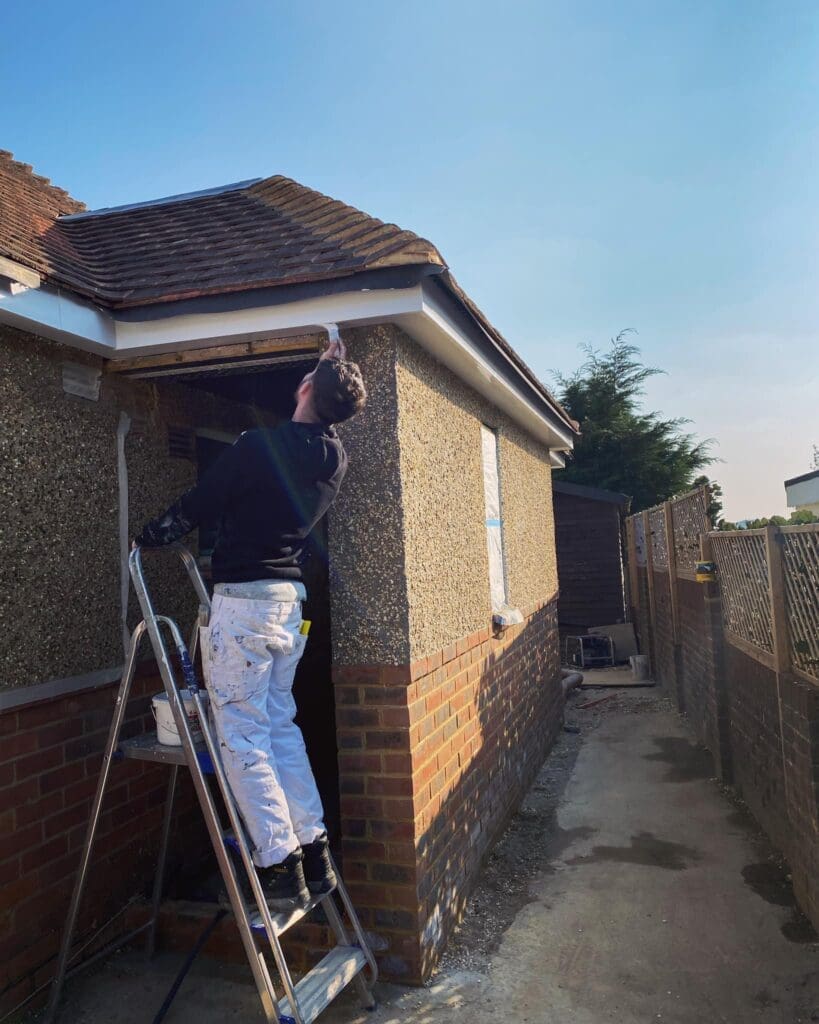
Brushes are ideal for detailed areas and cutting in around edges. Rollers are great for covering large, flat surfaces quickly. However, for a smooth, professional finish, many homeowners are now turning to spray techniques.
House exterior spray painting offers a flawless, even coat and is particularly effective for large properties or textured surfaces. Spray painting requires specialist equipment and an adept level of expertise to get right, so if you’re considering this approach we’d recommend using our commercial spray painters to ensure a professional finish.
Can I Paint My House Exterior Myself?
If you’re wondering whether you can paint your house exterior yourself, the answer is yes – but it depends on the scale of the project and your experience.
DIY exterior house painting can save money and be rewarding, especially for smaller homes or touch-up work. However, it requires time, the right tools, and a good understanding of preparation and application techniques for the project to be successful.
Benefits of Hiring a Professional Exterior Painter
Professional exterior house painting services offer a range of advantages that go beyond simply saving you time or money. Experienced decorators are trained and skilled in various methods of preparation and application, have access to professional-grade materials and work to a high level of attention to detail.
Professionals also work efficiently, completing projects more quickly while safely managing ladders, scaffolding, and hard-to-reach areas.
A professionally painted exterior is often more durable and resistant to peeling, cracking, and weather damage, thanks to expert application techniques and high-quality coatings designed for long-term protection. This means your home will not only look better initially but will also maintain its appearance for years to come, reducing the need for frequent repainting.
For larger or more complex projects, hiring professionals ultimately delivers a higher-quality, longer-lasting finish that offers better value over time.
Summary
Exterior house painting is an essential part of home maintenance that offers both protective and aesthetic benefits. From choosing the right exterior house paint colours to deciding between DIY and professional services, careful planning is key to achieving the best results.
Whether you’re refreshing a tired facade or completely transforming your home, quality materials, careful preparation and proper application will ensure your paintwork stands the test of time.
If you’d prefer a specialist to take care of your property’s exterior or would like further information about the process and associated costs for your home, get in touch with our friendly team for a free no-obligation quote.
Frequently Asked Questions
How often should I repaint my house exterior?
You should typically repaint property exteriors every 5–10 years, depending on the surface and its exposure to the elements.
What time of year is best for exterior painting in the UK?
Late spring to early autumn offers the best conditions, with warmer temperatures and low rainfall ideal for exterior painting.
What type of paint is best for exterior walls?
This depends on the material of the walls surface, but high-quality masonry paint is ideal for most exterior walls due to its durability and weather resistance.
How Much Does It Cost to Paint My House’s Exterior?
The exterior house painting cost in the UK can vary significantly depending on several factors, including the size and height of the property, the condition of existing surfaces, the amount of preparation required, the type and quality of paint used, accessibility and need for scaffolding, and labour costs in your area.
If hiring a professional, the cost can range from hundreds of pounds to several thousand pounds based on these factors.
While DIY can reduce costs, it’s important to factor in equipment, materials, and time when comparing options.
How much paint do I need to paint a house exterior?
This depends on the size of your home, but most properties require between 10–30 litres per coat on average, with two coats generally recommended by most paint manufacturers.
Do I need to prime before painting?
Yes, it is recommended to apply primer before painting, especially for bare or repaired surfaces to ensure proper adhesion and longevity.
How long does exterior paint last?
On average, 5–10 years, depending on the quality of paint and environmental conditions.
How can I make exterior paint last longer?
Proper preparation, applying primer, using high-quality paint, and regular maintenance will help extend the lifespan of your exterior paint.